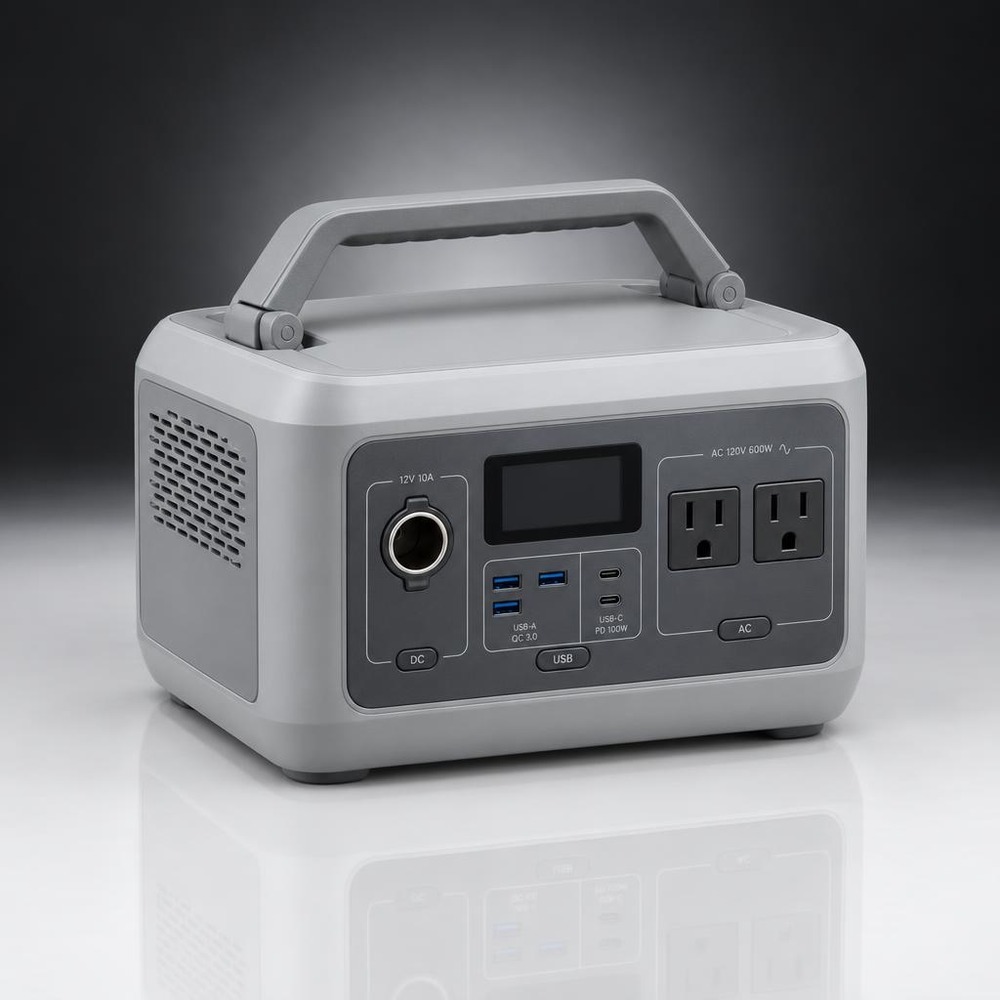
A portable power station stores electricity in a large rechargeable battery and delivers it through household outlets and USB ports. It keeps a refrigerator, a medical device, phones and lights running through a power outage, with no fuel, fumes or noise.
Choose a portable power station by what you need to keep running and for how long. Size it to your outage plan, then pick features that make it easy to recharge.
- Capacity: Add up the daily watt-hours your fridge, medical device, phones and lights use, and buy enough to cover at least one full day.
- Output: Choose a pure sine wave inverter whose continuous and surge watt ratings exceed your largest appliance, such as a refrigerator compressor.
- Battery chemistry: Pick lithium iron phosphate (LiFePO4) for thousands of charge cycles and a longer service life.
- Recharging: Look for wall, car and solar inputs so you can refill it while the grid stays down.
- Storage: Keep it charged to about 80 percent and top it off every three months so it is ready when the lights go out.