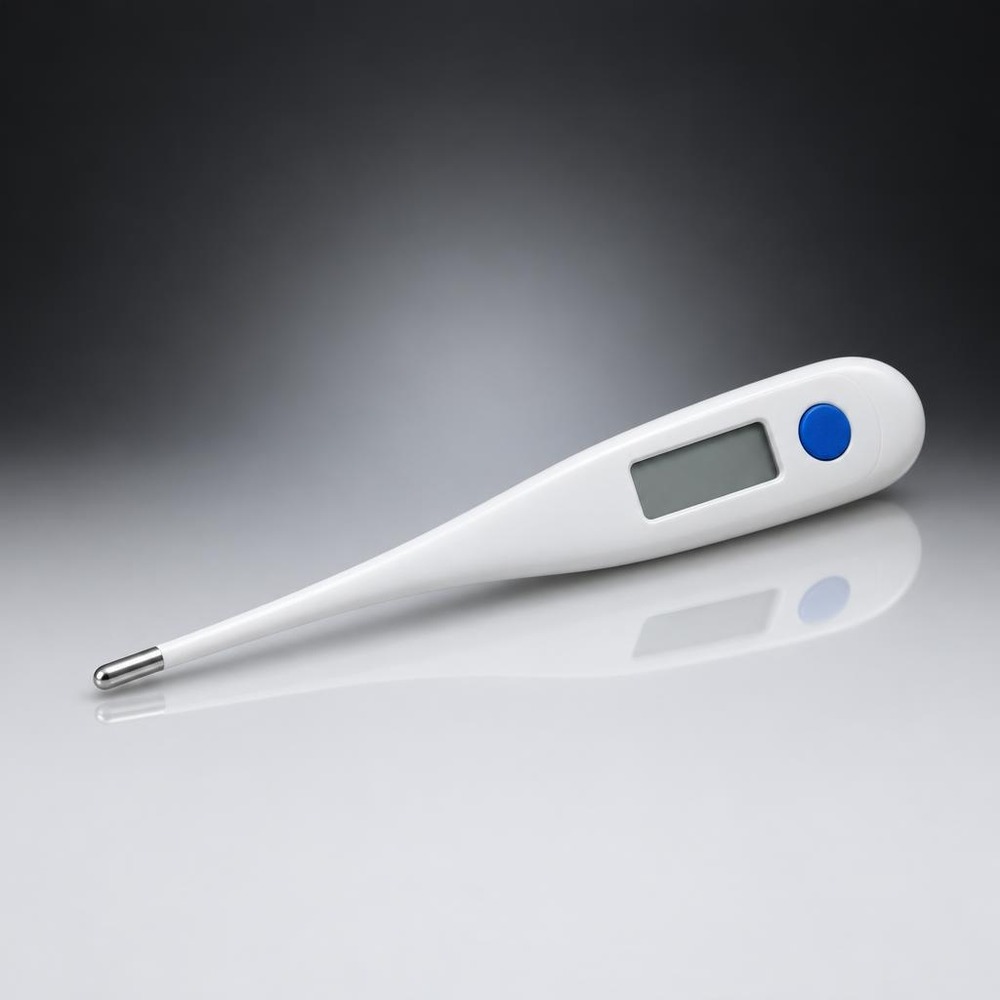
A medical thermometer measures body temperature so you can spot a fever early and track an illness or infected wound at home. When a doctor is hours or days away, clear readings help you decide on care and give a nurse line the facts it needs.
A medical thermometer tells you whether a fever is rising or breaking. That reading guides your care when the clinic is closed or the roads are out. Choose one that everyone in the house can read.
- Type: Pick a digital stick thermometer for accurate oral, underarm or rectal readings at any age.
- Household count: Stock one per kit and a second so a sick family member can have their own, which limits spread.
- Power: Store spare button batteries in the kit, or add a battery-free glass thermometer filled with a non-mercury liquid as a backup.
- Durability: Choose a model with a hard case and a water-resistant body so it survives a packed bag and frequent wiping.
- Readability: Look for a large display, a backlight for night checks and a beep when the reading is done.
- Infants: Use a rectal reading for babies under three months, since it is the most reliable method at that age.