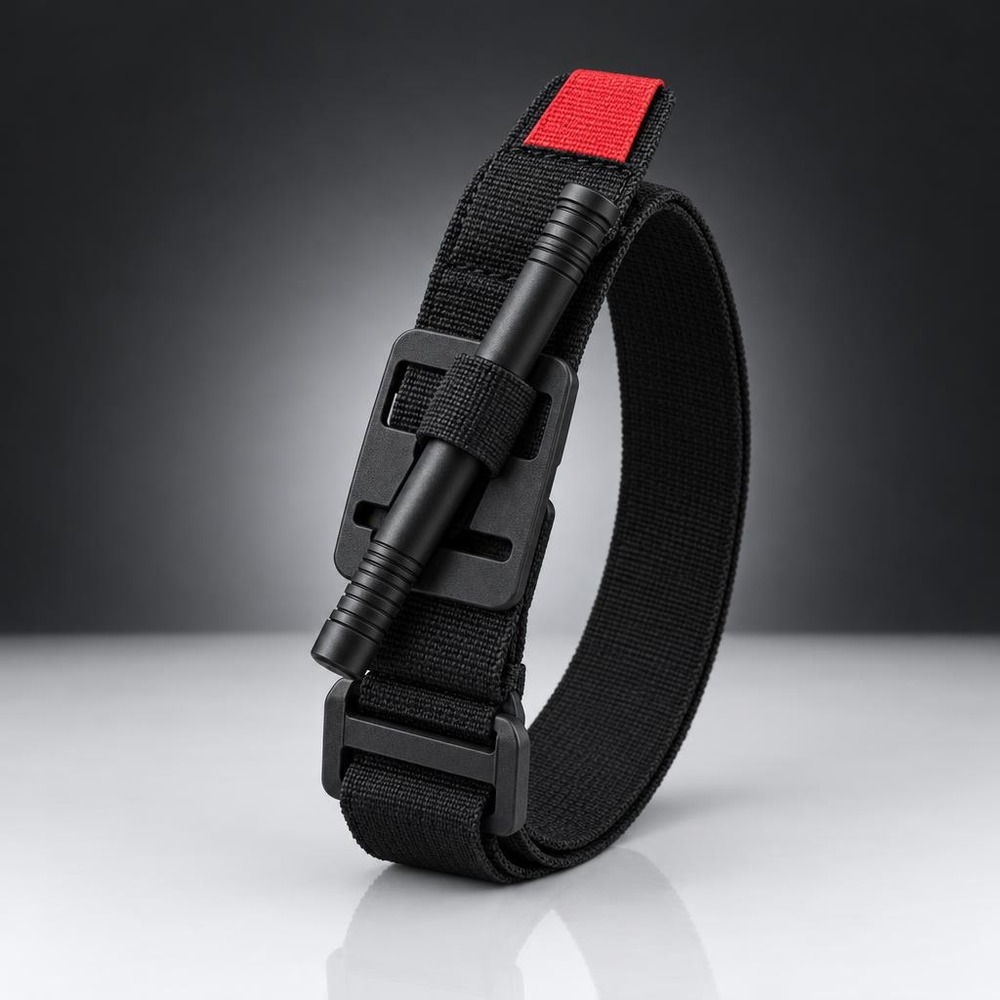
An emergency tourniquet stops life-threatening bleeding from an arm or leg wound until medical help arrives. It answers serious injuries from accidents or unrest, especially when emergency services are slow to reach you.
An emergency tourniquet stops severe bleeding from an arm or leg in minutes. Choose one built to work under stress, and learn to apply it before you need it.
- Windlass design: Pick a strap with a rigid rod and a locking clip, since that pairing tightens enough to stop arterial blood flow.
- One-handed use: Choose a model you can put on your own arm with one hand, because you may be the only person there.
- Tested construction: Look for a design that meets recognized trauma-care standards and has a wide strap that spreads pressure evenly.
- Household count: Stock one per first-aid kit and one per vehicle, plus a spare for practice so your kit tourniquet stays new.
- Storage: Keep it in its pouch, away from sun and heat, and replace it when the strap frays or the plastic cracks.
- Training: Take a bleeding-control class so you know where to place it and how tight to go.