


Against the Ice is a quiet, grueling survival drama that trades spectacle for authenticity. It dramatizes the true 1909 Alabama Expedition, following two men who push across Greenland's ice to settle a territorial claim and then face a brutal, drawn-out fight simply to get back alive. For the prepper viewer, this is the appeal: it is not a gunfight or a collapse fantasy, but a study of what sustained exposure, hunger, and isolation actually do to human beings.
What makes it worth your time is its refusal to make survival look glamorous. The men grow gaunt, sick, and half-mad. Their gear fails, their food runs out, and their bond frays under pressure. The polar bear attack delivers the film's one burst of raw danger, but the deeper threat is the slow one: the cold that never lets up and the distance that never seems to close. This is a useful reminder that most real survival situations are wars of attrition, not moments of action.
The chief lessons are about planning margins, caching resources, protecting morale, and never trusting that your support will hold. If you want a film that respects the reality of harsh environments and rewards patience, this earns a solid recommendation. It is slow by design, but a self-reliant viewer will find plenty to chew on regarding endurance, preparation, and the psychology of not quitting.
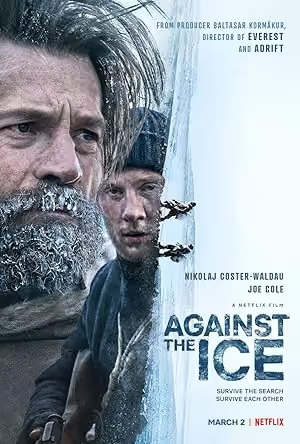
This film is based on the true story of Captain Ejnar Mikkelsen and Iver Iversen and the real Alabama Expedition of 1909. Polar exploration under exactly these conditions happened repeatedly in the early twentieth century, and men genuinely died or barely survived crossing Greenland's ice. Because it depicts documented historical events, the scenario is not merely possible but confirmed. Anyone venturing into a remote cold environment today faces the same physics of cold, distance, and dwindling food.
The film handles the slow grind of Arctic survival with unusual honesty. It shows starvation, scurvy, snow blindness, frostbite, and the mental toll of isolation rather than glossing over them. The deteriorating relationship between the two men and the descent into hallucination and paranoia ring true to accounts of prolonged deprivation. A few dramatic beats are compressed for pacing and the polar bear encounter is heightened, but the overall depiction of how bodies and minds fail under sustained cold and hunger is grounded and believable.
There are real takeaways here for anyone interested in cold-weather resilience. The film illustrates the danger of underestimating return trips, the necessity of caching supplies and food along a route, the crippling effects of vitamin deficiency and scurvy, and how morale and mental discipline are survival tools as vital as gear. It also demonstrates the importance of contingency planning, since the abandoned ship and camp show what happens when a support element gives up on you. The lessons are more about mindset, planning margins, and endurance than specific modern techniques, but they are concrete and memorable.


