


Bird Box is a tense, well acted survival thriller built on a deliberately unexplained catastrophe. Sandra Bullock anchors the film as a reluctant mother hauling two children through a collapsed world where simply opening your eyes outdoors means death. For the prepper viewer, the early act inside the barricaded house is the strongest material, because it dramatizes the classic problem of strangers sheltering together, arguing over supplies, security, and who gets a vote in life or death choices.
The scenario itself is pure fiction, and no amount of preparation prepares you for an enemy that cannot be fought, seen, or understood. That is the film's point and also its limitation from a self-reliance standpoint. The blindfolded river journey is gripping cinema but poor tradecraft, and a real family attempting it would fare far worse. Still, the movie is honest about the danger posed by unstable people within a group and about how quickly normal society unravels when the rules stop applying.
Worth watching for atmosphere, performances, and the group dynamics under siege, but treat it as entertainment rather than a manual. The genuine lessons here are about people, trust, and shelter discipline, not about the impossible threat driving the plot. Go in for the drama, and extract the small human truths where you can.
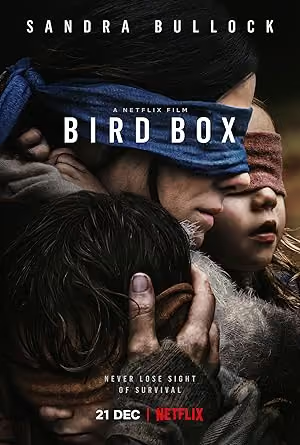
The core premise depends on invisible entities that drive anyone who sees them to instant suicide, which is a supernatural or purely fictional device with no real-world basis. There is no biological, chemical, or physical mechanism that produces this effect on a global scale within moments of eye contact. While mass panic and social collapse triggered by an unexplained threat has historical echoes, the specific engine of this story is firmly in the realm of fantasy, so its literal possibility is very low.
Setting aside the impossible threat, the human behavior is a mixed bag. The rapid collapse of order, the desperate scramble for a safe house, and the distrust among strangers thrown together all ring true, and the film is honest about how one unstable person inside a shelter can be more dangerous than the outside threat. Where it strains belief is in the practical execution of navigating a river blindfolded with children, which would realistically end in drowning or injury far sooner. Characters also make convenient discoveries and survive situations that should have been fatal, which softens the grounded tension the film builds early on.
There are a handful of transferable lessons even though the threat is fictional. The film illustrates the value of a defensible shelter, of inventorying and rationing supplies, of establishing sensory workarounds such as strings and bells for navigation, and of the hard truth that group cohesion depends on vetting who you let inside. It also shows the psychological toll of prolonged crisis on decision making. However, these takeaways are general and incidental rather than a deliberate survival curriculum, and the blindfold gimmick has little practical carryover, so the actionable value is modest.


