


By Dawn's Early Light is a lean, tense Cold War thriller that trades spectacle for procedure. Built for cable television, it lacks the polish of theatrical releases, yet it commits fully to depicting how a limited nuclear exchange could metastasize into all out war through broken communications and competing chains of command. Powers Boothe and Rebecca De Mornay ground the cockpit scenes, while James Earl Jones lends gravity to the airborne command element. For anyone drawn to the mechanics of doomsday rather than melodrama, it holds up well.
From a preparedness standpoint the film is valuable as a mental exercise more than a how to guide. It will not teach you to seal a fallout room or build a cache, but it hammers home a lesson every serious prepper should internalize: the systems meant to protect us are fragile, leadership can vanish in an instant, and the window between warning and impact is measured in minutes. That understanding shapes how you think about warning signs, redundancy, and self directed action when nobody is coming to save you.
Worth watching for students of nuclear risk and continuity of government scenarios. It is talky and dated in places, and civilians looking for ground level survival content will find little practical instruction. But as a sober dramatization of how close the world sat to the brink, and how easily it could tip, it rewards the viewer who wants to understand the threat before planning against it.
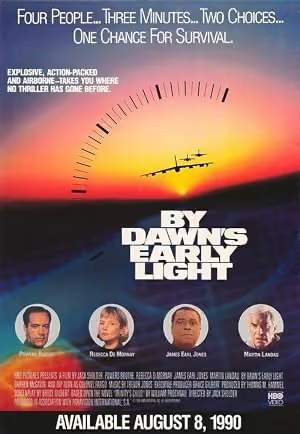
A limited nuclear exchange spiraling out of control through miscommunication, decapitation of leadership, and rigid automated retaliation doctrine is genuinely plausible. During the Cold War the superpowers maintained hair trigger alert postures, and documented incidents like the 1983 Petrov false alarm and the Able Archer exercise show how close accidental escalation came. The specific trigger in this film is fictional, but the underlying machinery of mutually assured destruction and the fragility of presidential succession under attack reflect real strategic realities that have not entirely disappeared.
The film earns credit for taking command and control seriously. It dramatizes the confusion of a decapitation strike, the ambiguity of orders, the struggle to verify who actually holds authority, and the terrifying momentum of standing war plans. Characters behave with professional discipline rather than melodrama for the most part, and the political friction between a surviving president and a hawkish successor rings true to fears about continuity of government. Some plot conveniences and the compressed television budget soften the edges, but the procedural bones are believable and grounded in how these systems were designed to operate.
The practical prepper takeaways are more conceptual than hands on. There is little here about shelters, fallout protection, food, or medical response for civilians, since the story lives inside cockpits and command bunkers. What it does teach is the value of understanding warning timelines, the reality that leadership and communications can fail catastrophically, and why independent decision making matters when official channels collapse. A prepper watching closely learns to think about EMP effects, the speed of escalation, and the wisdom of having plans that do not depend on functioning government direction.


