


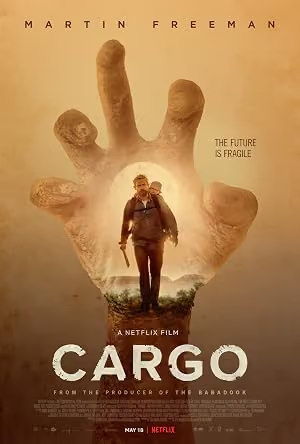
Cargo is a quiet, character driven entry in the zombie genre that trades gore spectacle for a father's race against his own biology. For the prepper viewer, the appeal is not the monster but the mindset. Martin Freeman's Andy is a study in staying task focused when everything is lost. He does not waste his final hours on despair; he inventories his time, plans a route, and works the problem of getting his infant to safety. That is a lesson worth watching.
The film's greatest strength is its respect for preparation and land knowledge. The Aboriginal community is portrayed as thriving precisely because they never abandoned the skills that modern comfort made optional: reading the country, hunting, healing, and dealing decisively with threats. The houseboat opening is a clean illustration of both the promise and the fragility of a bug-out location, a reminder that no refuge is permanent and complacency kills. The countdown device and the supernatural framing will annoy hard realists, and the pace is deliberate to a fault.
As entertainment and as a meditation on responsibility, Cargo earns its place. As a preparedness text it offers solid thematic value rather than a technical manual, strong on planning, provisioning, and dependent care, thinner on the practical mechanics. It is worth an evening for the self-reliant viewer who wants to think about what they would do with their last lucid day and who would inherit the people they protect.
The core scenario relies on a pandemic that transforms the infected into violent creatures within a fixed forty-eight hour window, complete with a bodily countdown. Real pathogens do not turn people into predatory zombies, so the premise itself is fantastical. That said, the film is anchored in a believable framework of a fast-spreading disease that overwhelms society, and the collapse of services, the abandonment of infrastructure, and the flight of survivors into the wilderness all echo real pandemic dynamics. The zombie mechanism drops the score, but the surrounding social collapse keeps it from the bottom.
Where the film shines is in its human behavior. Andy's calm, methodical planning after infection, his focus on securing a guardian for his child rather than raging against fate, and his careful rationing of his remaining lucid hours all ring true to how a disciplined person under a death sentence might act. The depiction of the Aboriginal community living off the land and applying old knowledge to a new threat is grounded and thoughtful. The infected themselves behave with a sluggish, sun-seeking logic that the film keeps internally consistent. The countdown gimmick and a few convenient encounters strain believability, but the emotional and logistical decisions are largely credible.
There are real takeaways here. The film demonstrates the value of a bug-out watercraft, the discipline of packing and provisioning before disaster strikes, and the harsh reality of continuity planning: who cares for your dependents if you go down. It underscores the survival worth of indigenous land knowledge, foraging, and reading terrain. It also models improvised solutions, marking hazards, and managing your own decline to protect others. What it lacks is technical depth on medical response, sanitation, or defense, so the lessons are more thematic than step by step, landing it squarely in the middle.


