


Dr. Strangelove is a black comedy that treats the end of the world as farce, and for the self reliant viewer that is precisely what makes it worth study. Beneath the laughter is a clear eyed portrait of how large systems fail: a single unstable man with the wrong access, a communication blackout that no one can penetrate, and a bureaucracy so tangled that stopping the machine proves nearly impossible. Preppers who spend their time thinking about failure modes will recognize every institutional weakness the film mocks.
The value here is not in bushcraft or bunker stocking, because the movie offers none of that. Its lessons are about systems thinking. It shows what happens when redundancy is missing, when authority is delegated without safeguards, and when human ego overrides sound procedure. The Doomsday Device subplot is a masterclass in why automated, unstoppable responses are terrifying, and why any plan you cannot pause or recall is a bad plan. These are principles that translate directly to how you design your own communication trees and contingency protocols.
Watch it for the mindset, not the manual. The film will not teach you how to survive fallout, but it will teach you to distrust brittle systems and to build in ways to stop, verify, and communicate when everything else is failing. That is a genuine and enduring takeaway, delivered with wit rather than despair, and it remains one of the most honest films ever made about how close we live to the edge.
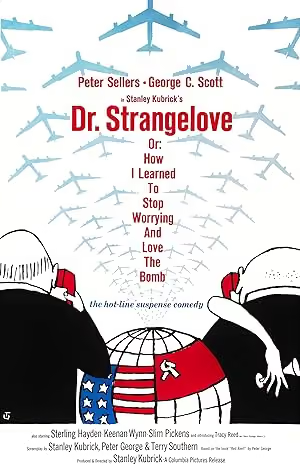
While the specific chain of events is deliberately exaggerated for satire, the underlying premise sits uncomfortably close to reality. During the Cold War, delegation of launch authority, fail safe protocols, and the sheer number of people with access to nuclear systems created genuine risk of accident or unauthorized action. Documented near misses, false alarms, and the real Soviet Perimeter or Dead Hand system show that automated retaliation and command breakdown are not pure fiction. The scenario earns a mid to high possibility score because the mechanisms it mocks were, and to some degree still are, real.
The film is a comedy, yet its portrayal of institutional behavior is sharper than most serious dramas. The bureaucratic paralysis, the ego driven generals, the difficulty of recalling forces once committed, and the terrifying logic of mutually assured destruction all ring true. Human behavior under pressure, from the paranoid Ripper to the posturing Turgidson, reflects how flawed individuals inside vast systems can produce catastrophe. Kubrick sacrifices some technical accuracy for satire, but the emotional and organizational realism of how people fail is remarkably grounded.
The concrete prepper takeaways are indirect but real. The film illustrates how single points of failure, communication blackouts, and overly rigid or overly loose protocols can cascade into disaster, a lesson that applies to any personal or community preparedness plan. It underscores the value of redundant communications, verified chains of command, and never trusting that the system will save you. It does not teach fallout survival, sheltering, or supply logistics directly, so its educational value lies in mindset and systems thinking rather than hands on skills.


