


Fail Safe is a lean, black-and-white nightmare that treats nuclear war not as spectacle but as a cold procedural failure. Sidney Lumet strips away music and comfort, leaving only ticking clocks, sweating faces, and the slow horror of a machine error nobody can undo. For a prepper, it is essential viewing not because it teaches you how to survive, but because it clarifies exactly what kind of threat sits at the very top of the risk pyramid and why some of it lies entirely outside your control.
The film earns its high realism marks by refusing easy answers. Henry Fonda's President is calm and human, negotiating with an adversary while the world burns toward the point of no return. The tension comes from institutional inertia, the recall codes that fail, the trust that erodes, the pilots trained too well to disobey. This is a study in how good procedures, meant to prevent disaster, can become the very mechanism of it. That lesson generalizes: the systems you depend on daily, from the power grid to automated logistics, carry the same brittle logic.
Where it falls short for the self-reliant viewer is actionable content. Nobody digs a shelter, stores water, or plans an evacuation. The message is fatalistic, and that is the point. Watch it to understand why threat awareness and geography matter, why you plan for fallout and communication blackouts, and why the biggest catastrophes are the ones no individual can bargain with. It is a sobering, superbly made film, worth your time as sober motivation even if it hands you no checklist.
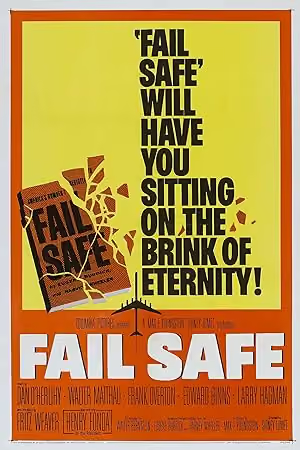
The core scenario, an accidental nuclear exchange triggered by a mechanical fault and compounded by human error, was a genuine Cold War fear and remains plausible in any era of nuclear-armed rivals relying on early-warning systems and fallible technology. History records multiple near-misses where faulty hardware, misread radar, and communication delays brought superpowers to the edge of catastrophe. The specific chain of events is dramatized, but the underlying possibility of an automated or procedural failure escalating beyond human control is very real and well documented.
The film is remarkably grounded for its era. It avoids sensationalism, showing tense, procedural decision-making inside the war room and the aircraft with a documentary sobriety. The characters behave like real professionals under unbearable pressure: the President stays measured, the generals argue doctrine, and the translator becomes a human link across an ideological divide. It correctly captures how bureaucratic momentum, chain-of-command rigidity, and the impossibility of recalling committed forces can trap rational people in an irrational outcome. Where it stretches is the specific final bargain the President strikes, but even that is presented as a logical extension of deterrence thinking rather than melodrama.
For the individual prepper the direct takeaways are limited, since no character survives by stockpiling or planning. The value is strategic rather than tactical: it teaches that some threats operate far above the individual level, that fallible systems can fail catastrophically, and that fallout and nuclear escalation are events you prepare for by location choice, shelter awareness, and understanding warning timelines rather than by heroics. It reinforces the case for radiation preparedness, communication planning, and not living in a primary target city, but it offers no hands-on skills or survival methodology.


