


Land of the Dead is George Romero returning to the genre he built, and as a piece of social commentary dressed in gore it delivers. The walled city of Fiddler's Green, where the elite sip cocktails above while the underclass rots below, is a pointed metaphor for how disaster does not level society but sharpens its divisions. For a prepper, the most interesting thread is not the zombies at all but the human politics: who controls resources, who gets left outside the wall, and how quickly leadership will sacrifice the many to protect the few.
As survival instruction, though, the film offers little you can act on. The scenario is pure horror fantasy, and the defensive strategy on display is a cautionary example rather than a model. A single barrier, no fallback positions, and a population lulled into complacency is exactly how not to plan. The characters survive more by narrative necessity than by sound decision making, and the advanced, tool-using zombies push the story further from anything grounded.
Watch it for the atmosphere, the sharp class critique, and Romero's craftsmanship, not for a preparedness manual. The takeaway worth keeping is simple: walls fail, complacency kills, and a community that eats its own from within is already lost before the threat ever arrives. That lesson is real even if the monsters are not.
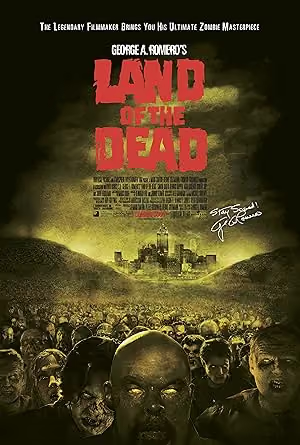
The core premise of a global undead uprising, complete with zombies that learn, communicate, and organize, has no basis in biological or physical reality. Reanimated corpses that hunger for the living belong firmly to fantasy. While the film gestures at real dynamics like class division and fortified enclaves, the driving hazard is impossible, so the scenario as depicted cannot occur in the real world.
Setting aside the impossible monsters, Romero is sharper than most on human behavior. The stratified city where the wealthy hide in a luxury tower while the poor scavenge and fight rings true to how disasters expose and deepen inequality. The greed of leadership, the false sense of security behind walls, and the willingness to exploit desperate people all track with real crisis sociology. Where realism slips is in the tactical foolishness, the reliance on a single defensive perimeter, and the convenient plot armor that lets characters survive absurd odds.
The usable lessons are indirect. The film illustrates the danger of over-relying on a single wall or barrier with no defense in depth, the fragility of a society split between rich and poor, and how complacency behind fortifications invites catastrophe. A prepper can take away the value of layered security, community cohesion over exploitation, and not assuming any perimeter is permanent. But these are thematic rather than practical, and there are no concrete skills, gear, or procedures to study.


