


Oblivion is a handsome, moody science fiction picture that a prepper can enjoy as entertainment without expecting much practical instruction. Tom Cruise plays a technician servicing drones on a ruined Earth, convinced he is guarding the last of a defeated humanity, until a crashed craft forces him to question everything he has been told. The film is gorgeous, the production design is crisp, and the central mystery unfolds at a patient pace that respects the audience.
From a self-reliance standpoint, the strongest thread is thematic rather than tactical. The whole story is a warning about accepting a curated version of reality handed down by a distant authority, and about how comfort and routine can lull a capable person into never questioning the system that feeds them. Jack's hidden lakeside retreat, stocked with salvaged books and keepsakes, is the closest the movie comes to modeling a prepper mindset: the impulse to build a private fallback and to keep something of your own outside the official grid.
That said, this is not a film to study for skills. The scenario is pure invention, the science is fantastical, and there are no water, food, or shelter lessons to extract. Watch Oblivion for its atmosphere, its twist, and its meditation on trust and identity, but do not mistake it for a survival manual. It rewards a thoughtful viewer emotionally far more than it rewards a practical one.
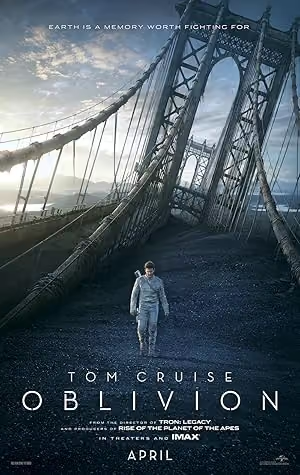
The core premise rests on an alien war that shatters the moon, wrecks Earth's biosphere, and leaves the planet policed by autonomous drones controlled by an orbital intelligence that clones a single human as its workforce. None of that reflects any real-world possibility we can point to. There is no precedent for extraterrestrial invasion, mass human cloning at this scale, or a shattered moon, and each element is speculative rather than grounded. The film earns a low possibility score because its scenario belongs firmly to imaginative science fiction, not to any credible threat a prepper would plan around.
Within its invented rules, the film is internally consistent and takes its own logic seriously. Jack's slow unraveling of the lie he has been fed, the deliberate way he investigates the crashed craft, and the emotional weight of discovering he is one of many clones are handled with restraint rather than spectacle. The technology, drones, and habitat feel thought through, and characters behave with plausible caution and doubt. It loses points because the central twist depends on a manipulation so elaborate that it strains believability, and human reactions to catastrophic loss are smoothed over for a polished action tone.
There are a few transferable ideas buried in the gloss. The film illustrates the danger of trusting a single controlling authority for all your information, the value of maintaining a private cache or hideaway, and the psychological toll of isolation on a two-person team. Jack's secret green refuge shows the instinct to preserve a personal fallback location. Beyond those loose themes, though, the movie offers almost no concrete, actionable preparedness skills. There is no practical guidance on water, food, medicine, or shelter that a self-reliant viewer could actually apply, so its educational value stays modest.


