


Rise of the Planet of the Apes is a sharp, character-driven science fiction drama that works far better than its premise suggests it should. Andy Serkis delivers a remarkable performance as Caesar, and the film treats its escalating disaster with more intelligence than most creature features. For the self-reliant viewer, the ape rebellion is the flashy foreground, but the real story worth watching is the human one: a biotech company that ignores risk, a family that fails to grasp what they have brought into their home, and a pathogen that slips loose almost unnoticed.
From a preparedness angle, the film rewards attention to its margins. The closing sequence, tracing the infected pilot spreading the virus across global flight routes, is a quiet and effective illustration of how a modern outbreak actually propagates. That single scene carries more preparedness weight than the entire ape uprising. The lesson is one every prepper already knows: threats rarely announce themselves loudly, and by the time the danger is obvious, the window to act has usually closed.
As a survival study it is limited, offering mindset rather than method, and the fantastical creature elements keep it from being taken fully seriously as a scenario. But it is genuinely entertaining, thoughtfully made, and worth an evening for anyone interested in how small institutional failures cascade into large catastrophes. Watch it for the atmosphere and the cautionary subtext, not for a checklist of skills.
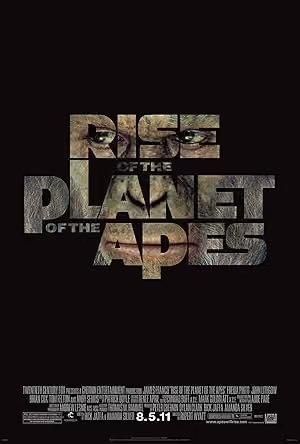
The central premise of a retrovirus granting apes human-level intelligence and organizing them into a coordinated uprising is science fiction and not a realistic near-term threat. That said, the film hides a more plausible danger in plain sight: the same engineered virus that boosts ape cognition is lethal to humans, and its accidental spread through a single infected lab worker mirrors real concerns about laboratory leaks and gain-of-function research. Intelligent ape armies are fantasy, but an escaped experimental pathogen from a poorly controlled biotech facility has genuine real-world precedent, which pulls the score up from the bottom.
The human side of the story behaves believably. A drug company chasing profit rushes trials, cuts corners, and ignores warning signs, which is consistent with how corporate incentives really distort risk. The gradual containment failure, the single exposed technician spreading infection through an airport, and the slow institutional blindness to what is happening all ring true. Where realism breaks down is the apes themselves, whose rapid strategic coordination, tool use, and near-military discipline stretch believability well past the point of grounded science. The film earns its middle score by nailing human and systemic behavior even as its creatures drift into fantasy.
The actionable lessons are indirect but present. The film is a case study in how catastrophes begin quietly: one containment breach, one nosebleed on an airplane, one arrogant executive overriding safety. A prepper watching closely will note the value of situational awareness during emerging outbreaks, the danger of dense transit hubs as spread vectors, and the wisdom of not trusting institutions to disclose bad news promptly. It offers little in the way of concrete skills like food storage, medical prep, or defense, so its educational value lies mainly in mindset and early-warning recognition rather than hands-on technique.


