


Shaun of the Dead is first a comedy and only second a survival story, so approach it with the right expectations. The zombie premise is impossible in any literal sense, and much of the tension exists to set up a joke rather than to teach a lesson. That said, Edgar Wright and Simon Pegg clearly understood the genre they were spoofing, and the film lands a few observations that any prepper will recognize instantly.
The strongest thread for a self-reliant viewer is the theme of denial. Shaun walks through a disintegrating world without noticing, which is exactly how normalcy bias works when the warning signs arrive gradually. The group's decision to fort up in a pub is a masterclass in choosing the wrong location, all glass and open access, and their bickering shows how quickly a team collapses without leadership or a shared plan. These moments are funny precisely because they are true.
Is it worth your time? Yes, as entertainment with a light preparedness undertone, not as instruction. You will laugh more than you learn, and the tactics on display are mostly examples of what to avoid. Watch it for the reminder to stay alert, agree on a rally point, and pick a defensible refuge before you need one, then look elsewhere for the serious material.
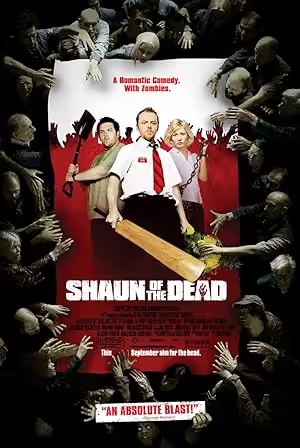
A reanimated corpse outbreak of the kind shown here has no basis in biology or medicine. The dead do not walk, and no known pathogen turns humans into shambling flesh eaters. As a literal scenario the film sits firmly in fantasy, which is why it earns the lowest possibility mark. The underlying idea of a rapidly spreading infection that overwhelms hospitals and services has a faint real-world echo, but the zombie mechanism itself is pure invention.
For a comedy, the film is surprisingly sharp about human denial. The joke that Shaun and Ed fail to notice the collapse of society around them mirrors how real people normalize early warning signs and carry on with routine. The improvised weapons, the barricading of the pub, and the arguments over who to trust all ring true. Points come off because the characters behave foolishly for laughs, wander into danger repeatedly, make noise carelessly, and choose a poorly defensible location, none of which a serious survivor would do. It is grounded in tone but loose in tactics.
There are a few real lessons buried in the gags. The film illustrates the danger of denial and slow situational awareness, the value of having a rally point and a plan agreed in advance, the problem of choosing an indefensible fallback location like a pub with big windows, and the reality that groups fracture under stress. On the negative side it teaches almost nothing about supplies, sanitation, or medical care, and its combat is played for comedy. A prepper can extract a short list of do-not-do-this moments, but it is not a manual.


