


Soylent Green remains one of the most atmospheric doomsday films ever made, and for the prepper it functions as a cautionary meditation rather than a how-to manual. The vision of a 2022 New York suffocating under heat, crowds, and pollution is uncomfortably resonant, and the film's central message about resource exhaustion lands harder now than it may have in 1973. Charlton Heston anchors the story, but it is Edward G. Robinson's quiet performance as a man who remembers real food and a living world that gives the film its emotional weight.
From a self-reliance standpoint, the value lies in what the film illustrates about dependence. The masses in this world have no gardens, no stores, no independence whatsoever. They rely entirely on a corporation to feed them, and that single point of failure defines their entire existence. Watching it, a prepper is reminded exactly why food independence, water security, and skepticism toward centralized supply chains matter. The infamous twist, while sensational, drives home the theme that a desperate and dependent population can be fed whatever those in power decide to feed them.
It is worth watching, both as a piece of influential science fiction and as a philosophical case for preparedness. It will not teach you to purify water or store grain, but it will make you feel in your gut why those skills matter. Pair it with practical resources and it becomes a solid motivational film, a grim reminder of the world we work to avoid by building resilience now.
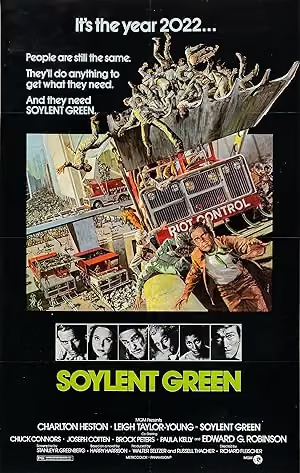
The core scenario of overpopulation, exhausted natural resources, runaway pollution, and a collapsing food supply is grounded in real concerns that scientists and policymakers still debate today. While the film's most shocking twist is a sensational dramatic device rather than a realistic outcome, the underlying pressures of ecological degradation, heat waves, and dependence on a single centralized food source are genuinely plausible. History shows famines, rationing, and corporate concealment of dangerous products are all real phenomena, which keeps the broader premise within the realm of possibility even if the specific ending is exaggerated for effect.
The film captures the atmosphere of scarcity with unusual conviction for its era. The crowded stairwells, people sleeping in hallways, water and hot food treated as luxuries, and the riot control scoops hauling people away all ring true to how a society under extreme resource stress might function. The rigid class divide, where the wealthy enjoy real food, clean apartments, and rented human companionship while the masses queue for processed wafers, reflects believable human behavior under collapse. Where realism slips is in the tidy detective plot mechanics and the somewhat convenient exposition, but the emotional and social texture of a depleted world is portrayed with care.
The practical takeaways are more thematic than tactical. There are no step by step survival techniques here, but a prepper gains a vivid lesson in the dangers of dependence on a single centralized food supplier and the fragility of systems when populations outstrip resources. The film underscores the value of food independence, the risks of trusting opaque corporations and governments during scarcity, and the way social order frays when basics like water, food, and shelter become luxuries. It is a strong conversation starter about self-reliance and stockpiling, even if it offers no concrete instructions.


