


The Battery is a low-budget zombie film that largely ignores the zombies, and that is precisely why a thoughtful prepper might appreciate it. Instead of set-piece action, director Jeremy Gardner delivers a character study of two men grinding through the tedium and tension of survival in a dead New England. If you come expecting hordes and headshots you will be disappointed, but if you want an honest look at what months of stress and boredom do to a partnership, this film has something to offer.
From a preparedness standpoint, the real content here is human. Ben embodies the survivor who accepts the new reality and adapts, hardening himself to the discomforts and threats around him. Mickey represents the far more dangerous mindset, the one that refuses to let go of the comforts of the old world and makes reckless decisions chasing them. Their conflict is the whole point, and it teaches a lesson worth internalizing: your greatest liability in a collapse may be your own inability to accept the situation, or the person beside you who cannot.
The film is slow, at times frustratingly so, and it will not satisfy viewers looking for tactical detail or plausible scenario building. But its grounded portrayal of interpersonal strain, its emphasis on mobility and caution, and its warning about hostile human communities give it modest but genuine value. Watch it for the mindset lessons, not the monsters, and you will come away with a quiet appreciation for how survival is as much mental as material.
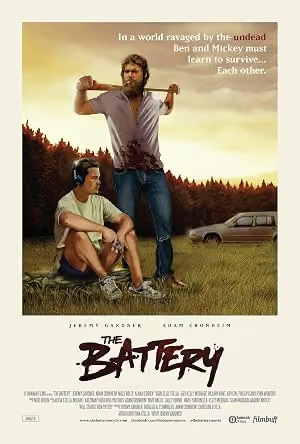
The core scenario is a zombie apocalypse driven by a reanimating pathogen, which has no basis in real biology. While pandemics and societal collapse are genuine possibilities, the specific mechanism of shambling reanimated corpses is firmly in the realm of fiction. The low score reflects that the central threat cannot occur, even if the broader theme of civilization breaking down has real historical echoes.
Where The Battery excels is not its monster but its people. The film is far more interested in the psychology of two mismatched survivors than in gore or action, and it captures the boredom, friction, and slow mental erosion of long-term survival with unusual honesty. Ben's adaptation to a feral, mobile lifestyle versus Mickey's denial and yearning for comfort rings true to how differently people cope with prolonged crisis. The threat of other humans, and the hostility of the fortified community, is more believable than the undead themselves. The deliberately slow pace mirrors real downtime that survival stories usually skip.
The practical takeaways are subtle rather than tactical. The film underscores the importance of mindset and psychological resilience, showing how denial and clinging to the old world can get you killed, while adaptability keeps you alive. It illustrates the value of mobility, staying off main roads, and constant vigilance, and it offers a sobering lesson that other survivors may be a greater danger than the primary threat. There is little concrete skill instruction on food, water, or medicine, so the lessons are more about temperament and human dynamics than hard prepping technique.


