


The Day After is not entertainment in the usual sense, and no prepper should watch it expecting a template for victory. It is a sober, deliberately unglamorous depiction of what a nuclear strike would do to an ordinary American community, and it earns its reputation as one of the most sobering broadcasts ever aired. For anyone who thinks seriously about worst case scenarios, it is required viewing precisely because it strips away the fantasy of coming out on top.
From a preparedness standpoint, the film's greatest value is honesty. It shows that in the zones nearest a detonation there is no preparation that helps, and that even those farther out face fallout, radiation sickness, contaminated food and water, and a medical system that simply ceases to function. It quietly reinforces the core lessons that matter most for this threat: distance from likely targets, hardened shelter, and a realistic understanding of fallout decay. What it does not give you is a survival manual, and that absence is intentional.
Judged as a study rather than a story, it holds up well. The scenario is plausible, the human behavior is believable, and the refusal to sugarcoat the aftermath is exactly what a serious prepper should sit with. Watch it not for hope but for clarity, and let it inform where you live, how you shelter, and how you think about the one disaster that preparation can only partly answer.
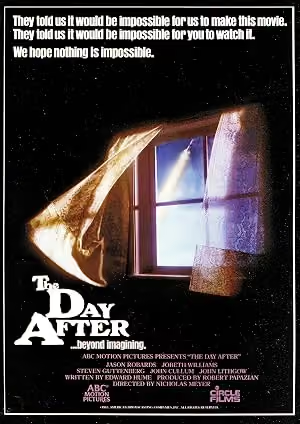
A large scale nuclear exchange between superpowers was and remains a genuine real-world possibility. The film was made at the height of Cold War tensions, and the scenario of escalating conflict in Europe spilling into a strategic exchange reflected actual nuclear war plans and standing arsenals. Thousands of warheads still exist today, so while such an event is not likely on any given day, it is far from impossible and has real historical grounding in the near misses of the twentieth century.
The film is notable for refusing the heroic survivalist fantasy. It shows people who do not know what is coming, who cannot outrun the blast, and who slowly sicken and die from radiation with no cure available. Medical infrastructure collapses under the load, order frays, and the survivors face a bleak and shortened future rather than a triumphant rebuild. Some elements are compressed for drama and the special effects are dated, but the human reactions, the confusion, denial, and desperation ring true to how ordinary people and overwhelmed institutions would actually respond.
There are real takeaways here, though they are lessons in limits more than in tactics. The film illustrates the value of understanding fallout, the importance of distance and shelter from a detonation, and the grim reality that stored supplies and medical care become nearly useless when infrastructure is destroyed at scale. A prepper learns that surviving the initial blast is only the beginning and that fallout timing, decontamination, and radiation exposure are the true killers. It does not offer step by step guidance, but it does clarify what you would actually be facing and why sheltering and location matter so much.


