


The Matrix is a landmark science fiction film that any prepper can enjoy on its own terms, but it should be watched as philosophy and entertainment rather than as a survival manual. Its central idea, that the comfortable world around us may be a manufactured illusion designed to keep us docile, resonates with the prepper mindset of refusing to sleepwalk through life. That thematic pull is genuine and worth the runtime, even if the mechanics of the story are pure fantasy.
From a practical standpoint the film offers little that translates to real-world readiness. The energy-farming premise collapses under basic science, the action sequences discard consequence entirely, and the resistance fighters win through chosen-one destiny rather than sound logistics or hard-earned skill. A viewer looking for lessons in food storage, defense, communications, or disaster response will find only the faintest metaphors here, and those must be dug out and translated before they mean anything.
Still, the movie earns its place on a thoughtful watchlist for the questions it raises about awareness, dependence on systems we do not understand, and the courage to accept an uncomfortable truth over a pleasant lie. Watch it for the ideas and the spectacle, appreciate the message about staying awake to your reality, and then close the laptop and go practice something that will actually keep you alive.
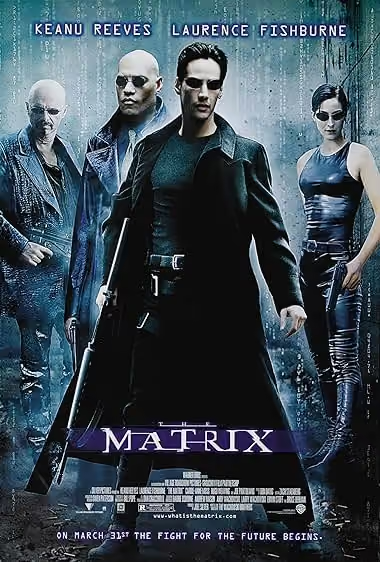
The core premise, that sentient machines have enslaved humanity inside a fully immersive computer simulation while harvesting human bodies for energy, is firmly in the realm of speculative fiction. The energy-harvesting concept in particular violates basic thermodynamics, and no existing or foreseeable technology can wire a human brain into a shared photorealistic dream world. While artificial intelligence advancing beyond human control is a legitimate long-term concern, the specific scenario depicted here is effectively impossible rather than merely improbable, which places it near the bottom of the possibility scale.
Within its own fantastical rules the film is internally consistent and the characters behave with reasonable logic given their circumstances, which lifts it above pure spectacle. Neo's disorientation, denial, and slow acceptance of an unwelcome truth ring emotionally true and mirror how real people process a shattered worldview. However, the physics-defying action, bullet dodging, and superhuman combat abandon any pretense of grounded consequence, and the human resistance operates on movie logic rather than credible tactics or logistics. It is believable as myth, not as a model of how real systems or people respond under pressure.
The practical preparedness lessons are thin and mostly metaphorical. The strongest usable theme is the value of questioning the official narrative and refusing to take comfort in convenient illusions, which maps loosely onto situational awareness and the prepper instinct to see systems as they truly are rather than as authorities present them. There are faint takeaways about operating in decentralized cells, maintaining secure communications, and the danger of trusting infrastructure you do not control. Beyond those abstractions there are no concrete skills, gear insights, or survival procedures a self-reliant viewer can act on.


