


Wild is not a survival thriller and preppers looking for firefights or collapse scenarios should look elsewhere. What it offers instead is a quietly instructive portrait of one woman walking more than a thousand miles alone with almost no experience, and paying for every gap in her preparation. For anyone interested in solo wilderness travel, the value is in watching how a person copes when the plan is thin and the body is tested.
From a self reliance standpoint the most useful moments are the humiliating ones. The scene where Cheryl cannot even lift her monstrous pack is worth the price of admission as a lesson in weight discipline, and her useless stove, ruined feet, and near miss with water shortages all drive home that the trail does not forgive vanity or laziness. Reese Witherspoon carries the film with an unglamorous, believable performance, and the landscape itself is a constant reminder of exposure, distance, and the thin margin a solo hiker operates within.
The film leans heavily on emotional healing and flashback, so it will not satisfy anyone wanting step by step technique, and its trail is populated with more kindness than danger. Even so, it earns its place on a prepper's watch list as a study in mindset, endurance, and the hard schooling of the underprepared. Watch it for the mistakes, the mental toughness, and the honest reminder that determination alone does not replace planning.
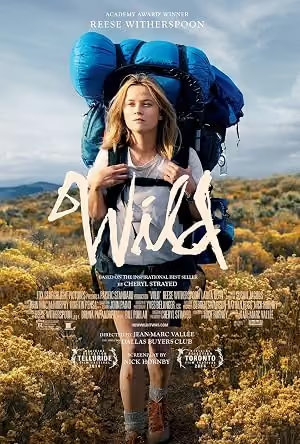
This is a true story adapted from Cheryl Strayed's memoir, so its core scenario is not merely possible but documented fact. Every year thousands of people attempt long distance hikes on the Pacific Crest Trail, and inexperienced hikers regularly set out underprepared. The dangers shown, from dehydration in the desert stretches to cold in the mountains and the vulnerability of a solo woman on a remote trail, are ordinary realities of backcountry travel. Nothing here strains believability.
The film is grounded and honest about the consequences of poor preparation. Cheryl overloads her pack to the point she can barely stand, buys the wrong fuel for her stove and cannot cook, gets blisters that cost her toenails, and misjudges her water between sources. These are exactly the mistakes real novices make, and the movie lets her suffer them rather than magically solving them. It softens some hardship for narrative and emotional focus, and the trail community appears conveniently helpful at times, but the physical and psychological arc of an unprepared hiker learning on the move is portrayed with real credibility.
There is genuine instructional value here, most of it delivered through Cheryl's errors. The film is practically a checklist of what not to do: test your gear before you go, know how much your pack should weigh, match your stove fuel to your stove, ration and plan water around known sources, break in your boots, and carry the right layers for wide temperature swings. It also shows the value of resupply boxes, trail journals, and leaning on the knowledge of experienced hikers you meet. A viewer who studies her mistakes will absorb a solid foundation in solo long distance hiking and self reliance, though the film is not a technical manual and glosses over navigation and first aid detail.


