


Zombieland is first and foremost a comedy, and any prepper watching it should set expectations accordingly. It is a fast, funny road movie about four mismatched survivors bumbling their way across a collapsed America. If you come looking for a serious study of societal breakdown, you will leave hungry. If you come to be entertained while occasionally nodding at a good habit, you will have a fine eighty-eight minutes.
What earns the film a bit of respect from a self-reliance standpoint is its central gimmick: Columbus survives by living according to a codified set of rules. Cardio, the double tap, checking the back seat, avoiding public restrooms. These are exactly the kind of repeatable, low-cognitive-load heuristics that keep people alive when stress is high and judgment is compromised. The movie almost accidentally makes the case that discipline and consistent procedure beat raw toughness. Tallahassee, for all his bravado, survives on instinct and luck, while the anxious kid survives on process.
The downside is that everything else about the film runs opposite to sound prepping. Ammunition is wasted, noise and light discipline are ignored, and the group repeatedly detours toward danger for sentimental or comedic reasons. There is nothing here about water, sanitation, medicine, or sustainable food, the pillars of any real long-term plan. Watch it for the entertainment and for the reminder that a personal rulebook is worth building, but do not mistake it for a manual. It is a popcorn film with one good idea wrapped in a lot of chaos.
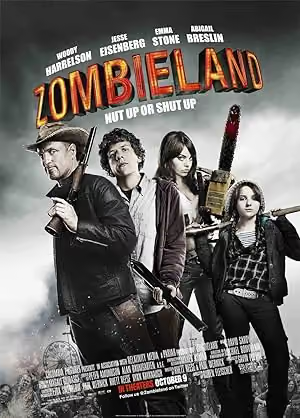
The core scenario, a mutated prion or virus that reanimates the dead into aggressive flesh eaters, has no biological basis in reality. While pandemics themselves are entirely plausible and historically documented, the specific mechanism of walking corpses spreading infection through bites belongs firmly to fantasy. A prepper can borrow the shape of the threat, a fast-moving contagion that collapses society, but the literal zombie premise is effectively impossible.
The film never pretends to be grounded, and it wears its comedy openly, so measuring it against realism is almost unfair. That said, some behavioral details ring true. The narrator's obsessive rule set reflects how survivors actually build habits and checklists to stay alive, and the constant vigilance around vehicles and enclosed spaces is smart. But the characters also take absurd risks for laughs, burn ammunition recklessly, stop to smash store merchandise, and travel to a theme park with the lights on, which would be a beacon for any threat. The tone favors spectacle over consequence.
There are a few genuinely useful nuggets buried in the jokes. The rules concept is the strongest takeaway: cardio matters, situational awareness saves lives, check your surroundings, do not assume a threat is neutralized, and travel light. The idea of a personal rulebook of survival heuristics is something a prepper can actually adopt. Beyond that, the film offers little on food storage, water, medical care, shelter, or long-term sustainment. The lessons are attitudinal rather than logistical.


