Wednesday, December 15, 2021


Getting prepared is the stage where reading turns into doing. You have identified the threats that concern you, and now you are assembling the supplies and building the skills to meet them. This is the most active and often the most satisfying phase of the prepper journey, because progress is visible. Every week the pantry is a little deeper, the bug out bag a little more complete, the plan a little more real.
Preppers at this stage should already have the basics required to survive a single day or respond to a common household emergency. If you do not, that is where to begin. From there, this stage is defined by two disciplines: checklists and bags. You learn the difference between an everyday carry kit, a get home bag, a seventy two hour bug out bag, and a stay at home reserve, and you learn that each serves a different scenario.
The people here are motivated and practical. They are families building a first aid kit and a water reserve, commuters packing a get home bag, homeowners installing carbon monoxide detectors and learning to shut off the gas. Their prepping is hands-on and checklist driven, and their goal is simple: close the gap between what they now know they need and what they actually have.
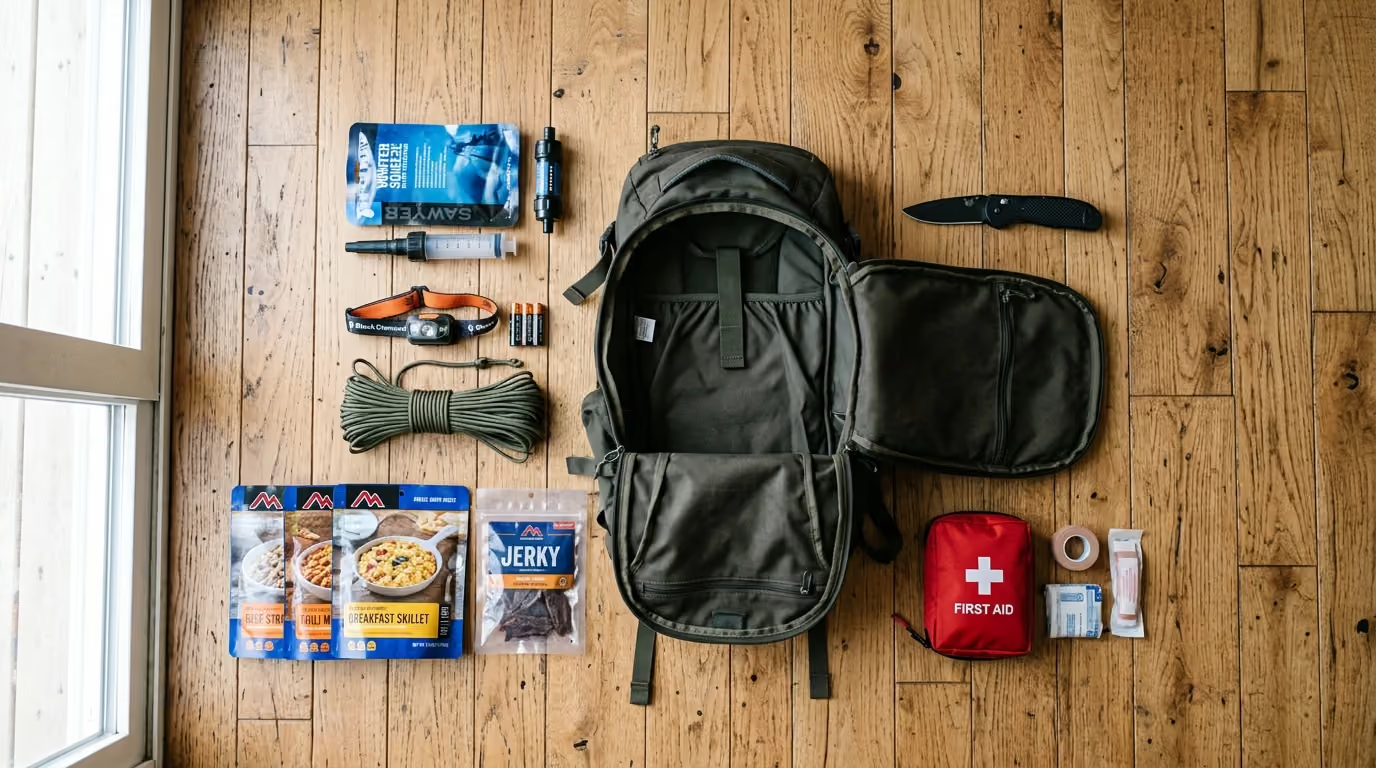
Getting prepared is the stage where the prepper life stops being research and becomes routine. You have done the thinking. You know which threats deserve your attention. Now the work is to close the gap between knowing and having, and between having and knowing how to use. This is the stage of supply checklists, bug out bags, water storage, first aid kits and the first genuinely useful survival skills. It is also the stage where most people discover that preparedness is far more achievable than it looked from the outside.
The foundation is the baseline. Before anything else, a household should be able to survive one day without outside help and respond to a common emergency. That means stored water, food that requires no cooking, a flashlight, a first aid kit, a fire extinguisher, and working smoke and carbon monoxide detectors. If that baseline is not in place, it comes before every bug out bag and every discussion of long term food storage. It is not glamorous prepping, but it addresses the emergencies that are overwhelmingly the most likely to actually happen to you.
From there, the getting prepared prepper learns the language of bags. The everyday carry kit is what you have on your person right now. The get home bag lives in your vehicle or at your desk and exists to walk you home when transportation fails. The bug out bag is the seventy two hour pack that leaves with you when you must evacuate. The stay at home reserve is the deep pantry and water supply that sustains a family sheltering in place. Each addresses a different problem, and understanding which one a given piece of gear belongs in is one of the real skill markers of this stage.
Checklists are the other essential discipline, and their power comes from taking decisions out of the moment. A well made prepper checklist ensures that when you are stressed, tired and running short of time, you are not trying to remember whether you packed the water purification tablets or the spare medication. The checklist thinks for you. Building your own, tailored to your family's medications, ages, pets and regional hazards, is far more valuable than downloading a generic one, because the process of building it is where you notice the gaps.
Skills belong here too, and this is where many getting prepared preppers under invest. Gear without competence is a false sense of security. Learn to actually use your water filter rather than admiring it in the box. Practice starting a fire. Take a real first aid class. Learn to shut off your water and gas at the main. Cook a meal entirely from your stored food and discover whether your family will eat it. Every skill you practice converts a purchase into a capability, and capability is what preparedness actually is.
This stage ends not when you have bought everything but when your preparations cover the specific threats you identified, and you have proven them. Your bags are packed, your water is stored, your family knows the plan, and you have used enough of your gear to trust it. At that point you are no longer scrambling to catch up. You are ready for the threats you set out to address, and the question shifts from what am I missing to what does prepared actually mean for my family. That question is the doorway to the Sufficiently Prepared stage.


