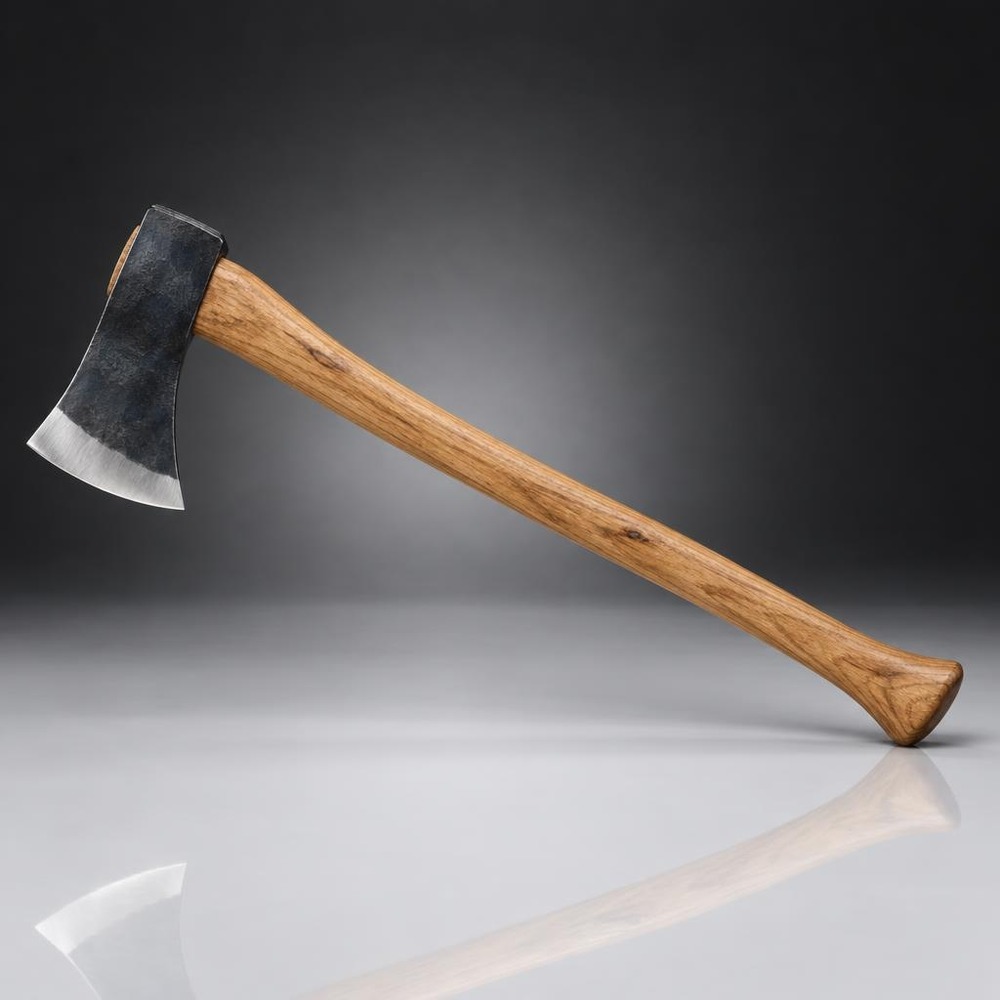
An axe splits firewood, clears brush and fallen limbs, and cuts poles for shelter when you leave home for good and must set up camp or a new place to live. It turns standing timber into heat, cooking fire and a roof for your family.
A good survival axe splits firewood, clears fallen limbs and shapes shelter poles for years after you leave home for good. Choose one you can carry in a pack and swing all day.
- Size and weight: Pick a head of about 1.5 to 2.5 pounds on a 19 to 28 inch handle to balance pack weight against real chopping power.
- Head steel: Look for a forged carbon steel head that holds an edge and takes a fresh one from a file and stone.
- Handle: Choose straight-grained hickory or a fiberglass composite handle that absorbs shock, with the head seated tight on a solid wedge.
- Sheath and storage: Get a leather or heavy nylon sheath to guard the edge and your pack, and wipe the head with oil to stop rust.
- Single-purpose design: Choose a true chopping axe over a gadget hatchet with hidden saws or hammers, since a plain head and handle stay strong longer.