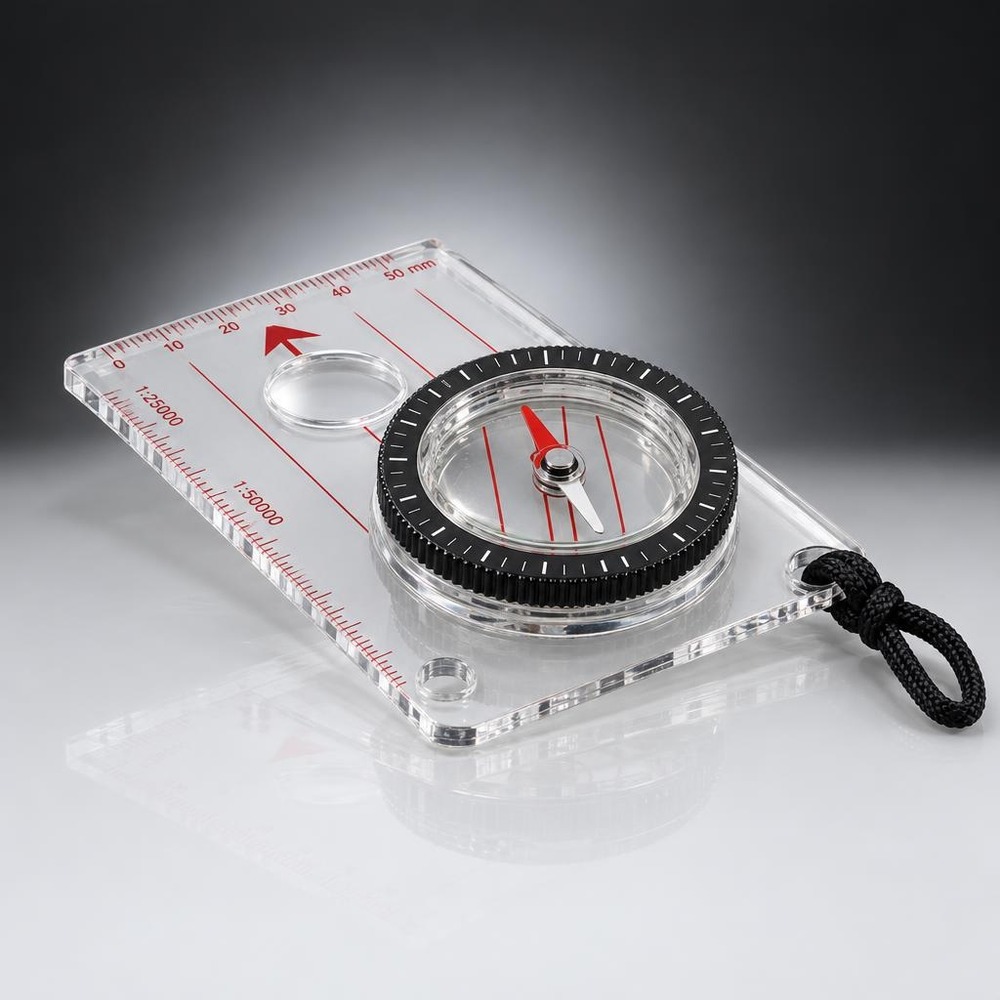
A compass gives you a reliable direction with no batteries or signal, so you can follow a map on foot to home, a meeting point or a safe destination. It keeps you on course when phones and GPS fail, roads close or you have to leave on short notice.
A good survival compass works with a paper map, reads clearly in poor light, and keeps pointing true for years without power.
- Baseplate design: Pick a clear baseplate compass with a ruler and map scales so you can take bearings straight off a map.
- Liquid-filled capsule: A damped needle settles fast and holds steady while you walk.
- Adjustable declination: A declination setting corrects for the gap between magnetic and true north once, so you skip the math in the field.
- Luminous markings: Glowing points let you read a bearing at dusk or under a headlamp.
- Sturdy build: Choose a sealed, solid housing over the tiny button compasses on keychains and gadgets, which drift and crack.
- One per bag: Pack a compass and a local paper map in each go-bag, stored clear of magnets and electronics.