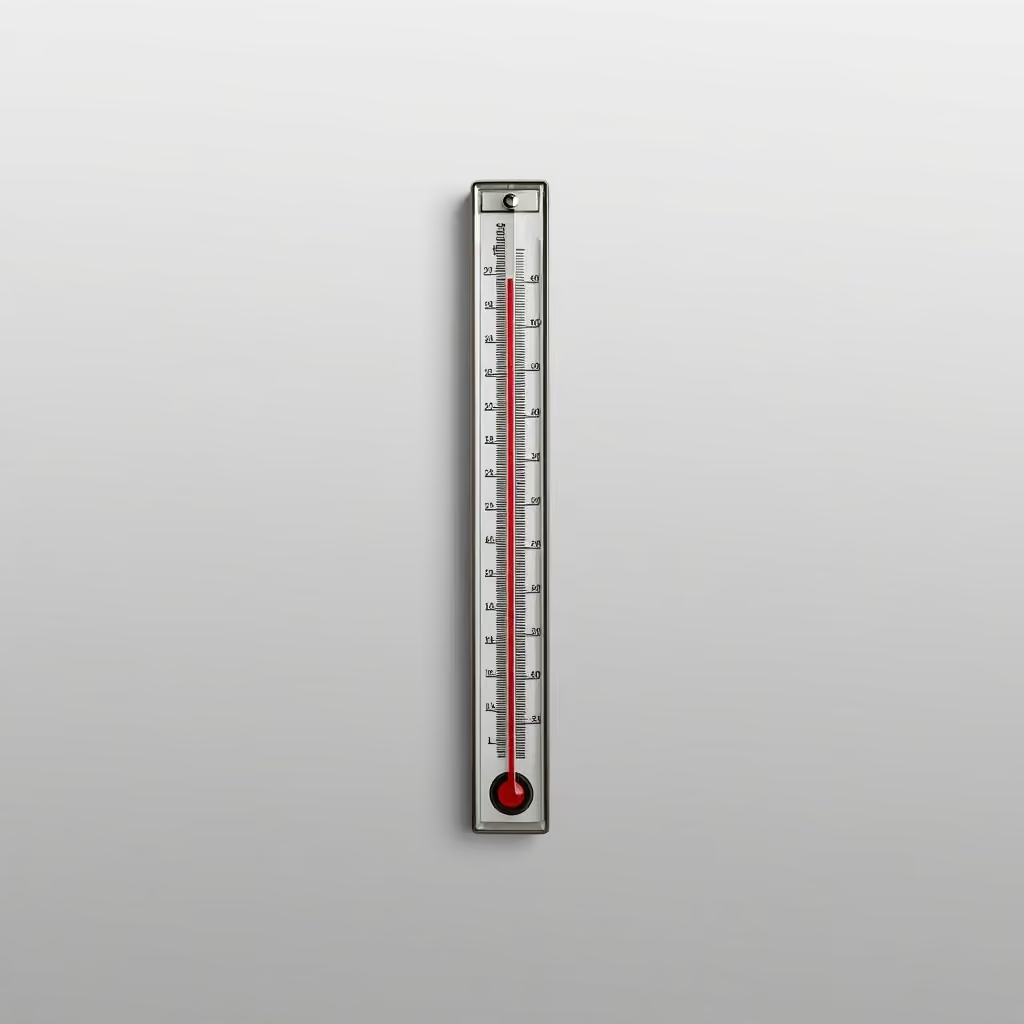
Monitors the temperature of a food storage space. Heat is the biggest enemy of a reserve and steady beats cold, so knowing what the room actually does is how you know whether to trust it.
- Aim for consistently below seventy degrees. Every ten degrees warmer roughly halves shelf life, which makes this the highest-leverage number in your storage plan.
- Get min and max memory. A space that hits ninety in August and fifty-five in January is worse than one that sits at seventy-two year round, and you will never catch that by glancing at it.
- Place it with the food, not on the door. The temperature at the top of a garage has little to do with the temperature at the bottom of a shelf.
- Read it seasonally rather than daily. You are looking for the swing across the year, not the moment.
- Remember that a cheap unit in the right spot beats an accurate one in the wrong spot.