


Adrift dramatizes the true ordeal of Tami Oldham, who survived roughly six weeks alone on a broken yacht after Hurricane Raymond battered her and her fiance in the Pacific. For the self-reliant viewer, this is a compelling study in solo survival under conditions you cannot walk away from. There is no calling for help, no bugging out to a cabin. There is only the boat you have, the skills in your head, and the resources you can scavenge from the wreck around you.
The film earns its keep by showing competence in action. Tami navigates by sextant, jury rigs a sail, catches rainwater, runs a hand watermaker, and rations dwindling supplies while managing an injured partner. These are exactly the disciplines a prepper preaches: know your tools, maintain redundancy, and keep functioning when your primary systems fail. The nonlinear structure and a late emotional reveal soften the raw physical toll of true castaway survival, which is the film's main weakness for those wanting unflinching realism, but the survival fundamentals it depicts are sound.
Worth watching for anyone interested in maritime preparedness or the psychology of endurance. You will not learn everything about ocean survival from a 96 minute drama, but you will absorb the core truth that skills, calm decision making, and refusal to quit are what keep a person alive when rescue is not coming. Pair it with real accounts and a seamanship course and it becomes a useful entry point rather than mere entertainment.
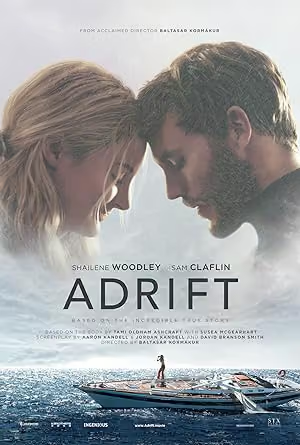
This is based on the true story of Tami Oldham, who in 1983 sailed into Hurricane Raymond in the Pacific and survived weeks adrift on a crippled yacht. Sailing across open ocean and encountering a major storm is not only possible, it is a documented reality faced by ocean voyagers every year. Weather routing has improved since 1983, but rogue storms, forecast busts, and mechanical failures still leave sailors in dire straits. The core scenario is entirely plausible and grounded in a real event.
The film handles the physical realities of survival at sea with reasonable care: rationing water and food, using a sextant for celestial navigation, jury rigging a sail, running a manual watermaker, and rigging a fishing setup. Tami's grief-driven hallucination of Richard is a storytelling device rather than a literal event, and the nonlinear structure hides some of that reveal, which some viewers find manipulative. Her physical decline from dehydration and exposure is understated compared to what a real castaway would suffer over that timeframe, but her decision making, determination, and improvisation ring true to how a competent sailor would actually respond.
There are genuine takeaways here. The film shows the value of navigation skills without electronics, the importance of securing your vessel and knowing storm tactics before you sail, water rationing and rain catchment, salvaging usable gear from a wreck, and the sheer psychological grit needed to keep working a problem alone. It also quietly warns that a single injured crewmate can shift the entire survival burden onto one person, so redundancy of skills across a crew matters. It is not a technical manual, but a prepper studying it will pull real lessons about self-reliance, improvisation, and maintaining a will to live.


