


The Shallows is a lean, well shot survival thriller that does far more with its single location than you might expect. For the prepper viewer, the appeal is not the shark itself but the way Nancy approaches an impossible situation as a series of solvable problems. She assesses her injury, controls the bleeding, identifies temporary safe ground, monitors the tide, and conserves her strength for the moment that matters. That problem solving mindset is the real subject of the film, and it is worth watching for that alone.
Where the movie stumbles is in the escalation. The great white becomes less a wild animal and more a slasher villain by the final act, and the climactic showdown trades believability for spectacle. Preppers who value grounded scenarios will roll their eyes at the last fifteen minutes. Still, the film never lets its heroine act stupidly to advance the plot, which is a low bar that many survival movies fail to clear. Her decisions mostly make sense, and her injuries carry real weight throughout.
Overall this is a solid recommend as a short, tense study in staying functional under extreme stress. The tourniquet sequence alone is worth discussing with anyone who thinks first aid is optional, and the broader themes of resourcefulness and reading your environment apply well beyond open water. Watch it for the mindset, take the improvised medical lesson to heart, and forgive the overcooked finale.
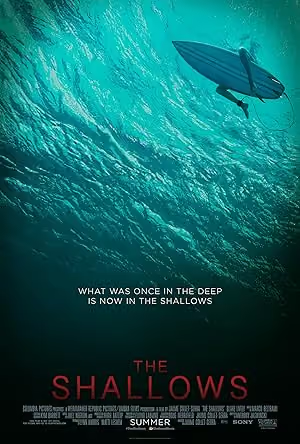
Shark attacks on surfers and swimmers are real and documented every year, so the core premise is grounded in genuine possibility. What lowers the score is the specific stacking of circumstances the film depends on: a lone surfer on a hidden beach, a territorial great white that behaves more like a persistent predator than a real one, and a rock outcrop that conveniently appears and disappears with the tide. Individually plausible, the combination is dramatized well beyond typical real-world encounters, but nothing here is impossible.
The film gets several survival fundamentals right. Nancy improvises a tourniquet from her wetsuit and earrings to control a serious leg wound, rations her energy, reads the tide, and uses elevation and distance to buy time. Those choices are credible and smart. Where realism slips is the shark's near supernatural focus and endurance, the exaggerated final confrontation, and the way injuries that would incapacitate most people are pushed aside by adrenaline. Blake Lively's performance keeps the panic and pain believable even when the plot mechanics do not, so the human behavior lands better than the animal behavior.
There is more usable content here than the premise suggests. The standout lesson is improvised hemorrhage control, applying a tourniquet from available materials and understanding that severe bleeding kills faster than almost anything else. Nancy also models staying calm, taking inventory of resources, using terrain to your advantage, timing movement to the environment rather than fighting it, and signaling for help. The takeaways about wound infection, dehydration, and pacing yourself in a prolonged emergency are all transferable to land based scenarios, even though the specific threat is a shark most viewers will never face.


