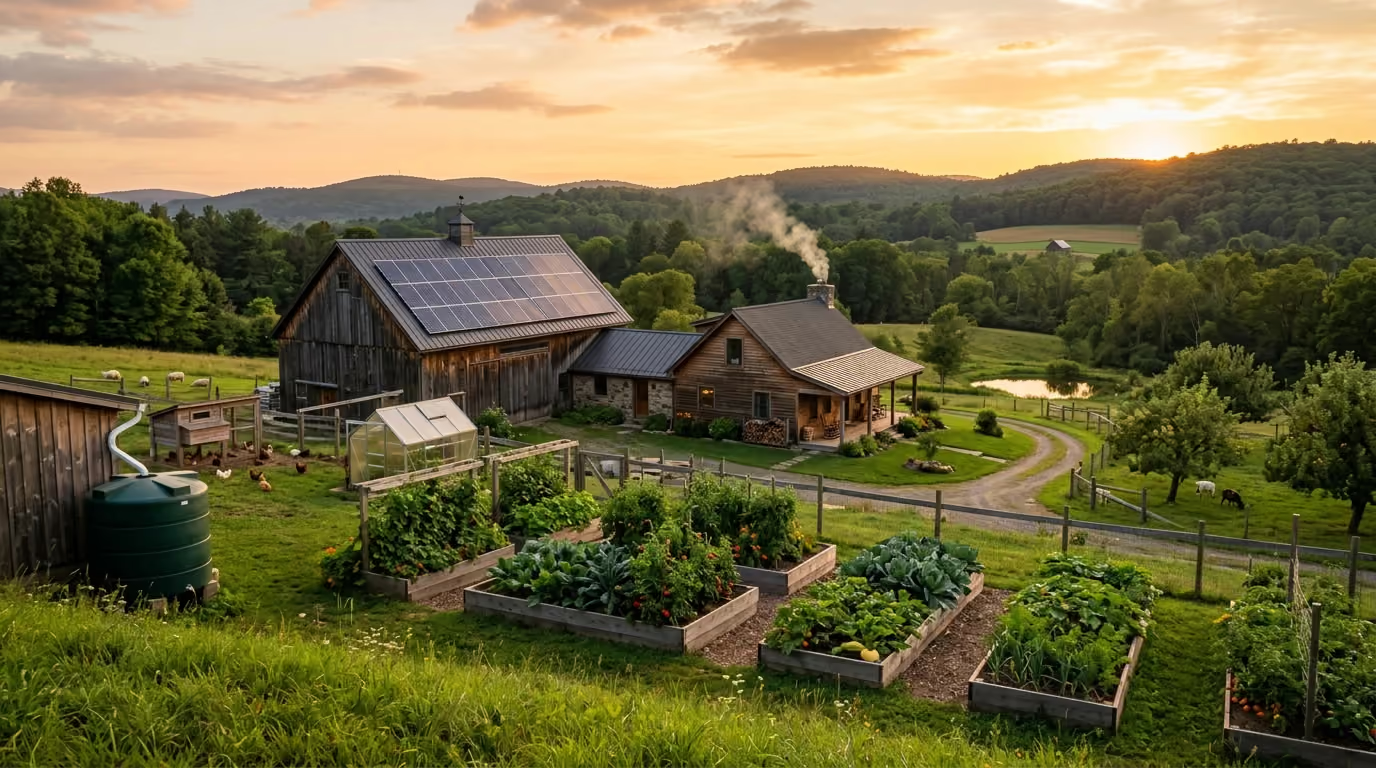
Fully prepared preppers have been at this for some time. Whether they grew up in a prepping family or evolved into it over years, people at this stage live a far more sustainable and self sufficient existence than most. Their focus has shifted decisively from surviving a disruption to sustaining a life through one, and long term survival has become the organizing principle of how they eat, heat, build and plan.
This is the stage of the bug out location, the homestead, the deep larder and the practiced skill set. When someone asks themselves where would I go if SHTF, the answer that comes to mind is usually a person who fits this description. If you do not know anyone in this category, it needs to be you. And even if you do, it should probably still be you, because unless you are part of the family they have prepared for, how warmly you will be welcomed is an open question.
Fully prepared is an elusive label. Most preppers who wear it have simply been sufficiently prepared for long enough that the phrase feels earned. They have accepted the outcome of certain dangerous threats beyond their control and settled comfortably into living the prepper life. Because in truth, are any of us ever fully prepared?

Fully prepared preppers have been living this way long enough that preparedness is no longer something they do. It is something they are. Whether they grew up in a prepping household or evolved into one over a decade of steady effort, they have moved past kits and checklists into sustainable living, long term survival and genuine self sufficiency. Their pantry is measured in months rather than days. Their water does not depend on the municipal supply. Their skills are practiced rather than theoretical, and their plans account for the second and third year, not just the first two weeks.
The defining shift of this stage is from surviving to sustaining. A sufficiently prepared family can ride out a disruption on stored supplies. A fully prepared family can produce, repair and replace. That means gardening and food preservation, seed saving and livestock, off grid power and water harvesting, fuel storage and mechanical competence. It means knowing how to sew, to build, to treat a wound when there is no clinic, and to defend a home when there is no dispatcher. Every one of these capabilities takes years to build, which is precisely why this stage cannot be purchased or rushed.
Location becomes strategic here in a way it never was before. Fully prepared preppers think hard about where they live, where they would go, and how they would get there. Many establish a bug out location or a homestead, a defensible piece of ground with water, arable soil and distance from the population centers where trouble concentrates during a collapse. When people ask themselves where they would go if SHTF, the honest answer usually involves someone at this stage. If you cannot name such a person in your life, that is a signal. It needs to be you. And even if you can name one, it should probably still be you, because unless you are inside the family they have prepared for, your welcome at the gate is not guaranteed.
Community enters the picture as a serious survival asset rather than a nice idea. No individual, however skilled, covers every need or stands watch around the clock. Fully prepared preppers cultivate trusted neighbors, trade relationships and networks of people with complementary skills, understanding that a group with a medic, a mechanic, a gardener and a builder is exponentially more resilient than four isolated households. This is also the stage where operational security matters, because a well stocked, well known homestead attracts exactly the attention it does not want.
Yet fully prepared remains an elusive and somewhat honest fiction. Most preppers who claim the label have simply been sufficiently prepared for long enough that the words feel earned. They have made peace with the threats that lie beyond their control, accepted that no preparation covers a direct asteroid strike or a nuclear detonation overhead, and settled into living the prepper life rather than perpetually preparing for it. That acceptance is maturity, not surrender. Because if we are being truthful with each other, are any of us ever really fully prepared?
For most preppers, this is where the road comfortably ends, and a life of sustainable self reliance is a fine place to arrive. But a small number look past the disruption and past the collapse, toward the question of what comes after, and what it would take not merely to survive a cataclysm but to help rebuild on the far side of it. That rarefied territory of hardened shelters, generational planning and civilization scale thinking is the New Civilization stage.