Wednesday, December 15, 2021


Staying educated is the one prepper stage that never ends and never gets crossed off a list. It runs alongside every other stage, from the first week of researching preparedness to the maintenance of a hardened compound. Threats evolve, best practices change, gear improves and gets obsolete, and survival skills quietly fade whenever they go unpracticed. Preparedness that is not refreshed is preparedness that is slowly expiring.
This stage belongs to every prepper simultaneously. The beginner staying educated is separating credible sources from sensationalism. The sufficiently prepared prepper is re-reading their first aid manual and practicing fire starting in the rain. The homesteader is learning a new food preservation method or a new repair skill. The common thread is the refusal to assume that what you learned five years ago is still accurate, still sufficient, or still lodged in your hands rather than just your memory.
The prepping focus here is knowledge itself: reliable information sources, hands-on practice, drills with family, after action reviews of real emergencies, and the deliberate updating of plans as your household, your region and the threat landscape change. Skills, unlike supplies, cannot be stockpiled. They can only be maintained.
Staying educated is the prepper stage nobody graduates from. Every other stage in the prepper journey has a beginning and an end, a point where you can look at what you have built and say that phase is complete. This one does not. It runs parallel to all of them, from the first anxious week of researching preparedness to the daily rhythm of a fully prepared homestead, and the moment a prepper decides they have learned enough is the moment their preparedness begins quietly rotting.
The reason is simple. Preparedness is not a stockpile, it is a capability, and capabilities decay. The tourniquet in your first aid kit does not expire, but your ability to apply it correctly under pressure absolutely does. The water filter in your bug out bag works exactly as well as your memory of how to backflush it. Skills you learned once and never practiced are not skills, they are memories of skills, and a genuine emergency is a cruel place to discover the difference. Supplies can be stored. Competence must be maintained.
The threat landscape also refuses to hold still. The risks that dominate a region shift as climate patterns, infrastructure, technology and society change. Cyber threats and grid vulnerabilities that barely registered a generation ago now sit near the top of many preppers' lists. Pandemic preparedness looked very different before the world lived through one. Best practices in first aid, water purification, food storage and home defense are all revised as evidence accumulates. A prepper working from a decade old understanding is not prepared for the present, they are prepared for the past.
Staying educated therefore means cultivating good information habits above all. That starts with source discipline, the ability to separate credible guidance from the sensationalism and doom marketing that saturate this space. Legitimate sources, established institutions, practitioners with real field experience and evidence that can be checked deserve your attention. Content engineered to frighten you into a purchase does not. The prepper who evaluates information critically avoids both the paralysis of endless alarm and the false confidence of bad advice confidently delivered.
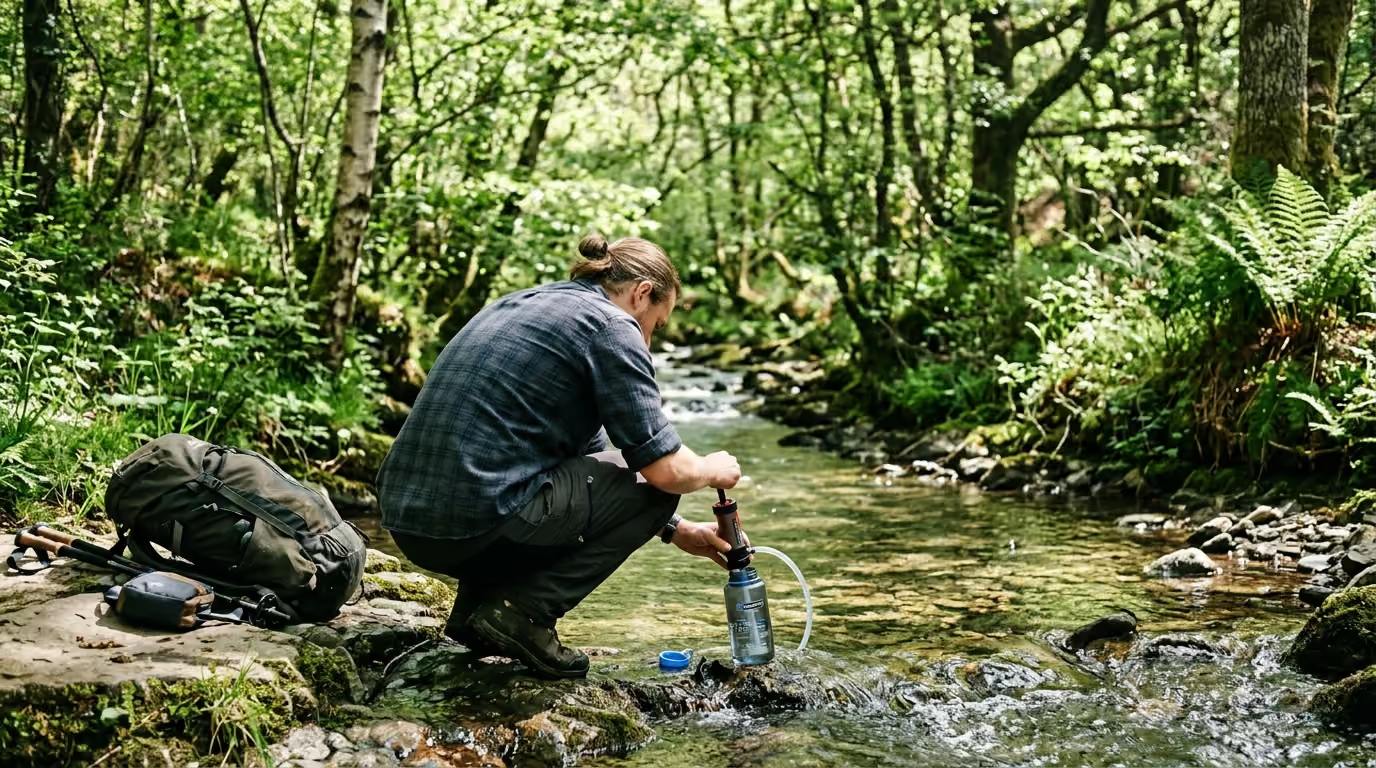
Practice is the other half, and it is the half most preppers skip. Reading about fire starting is not fire starting. Owning a first aid kit is not knowing first aid. Set aside real time to use your gear, cook from your stored food, run the generator, filter creek water, navigate without your phone, and walk your get home route. Drill the family plan so children know where to go and what to do when the adults are frightened. Conduct an honest post drill review whenever a real emergency touches your household, however small, because a power outage or a kitchen fire is free tuition in what your plan actually gets wrong.
Finally, staying educated means letting your plan change as your life does. A new child, an aging parent, a move to a new region, a chronic diagnosis or a new commute can quietly invalidate preparations that were sound a year ago. Revisit your threat list annually. Ask whether the definition of prepared you settled on still fits the family you have now. Preppers who treat their plan as a living document stay genuinely ready, while those who treat it as a monument stay ready for a household that no longer exists.
Wherever you sit in the prepper journey, from researching preparedness through getting prepared, sufficiently prepared, fully prepared and even ready for a new civilization, this stage travels with you. It is the discipline that keeps every other stage honest. Preparedness is not a destination you reach and defend. It is a practice you keep, and staying educated is how you keep it.


